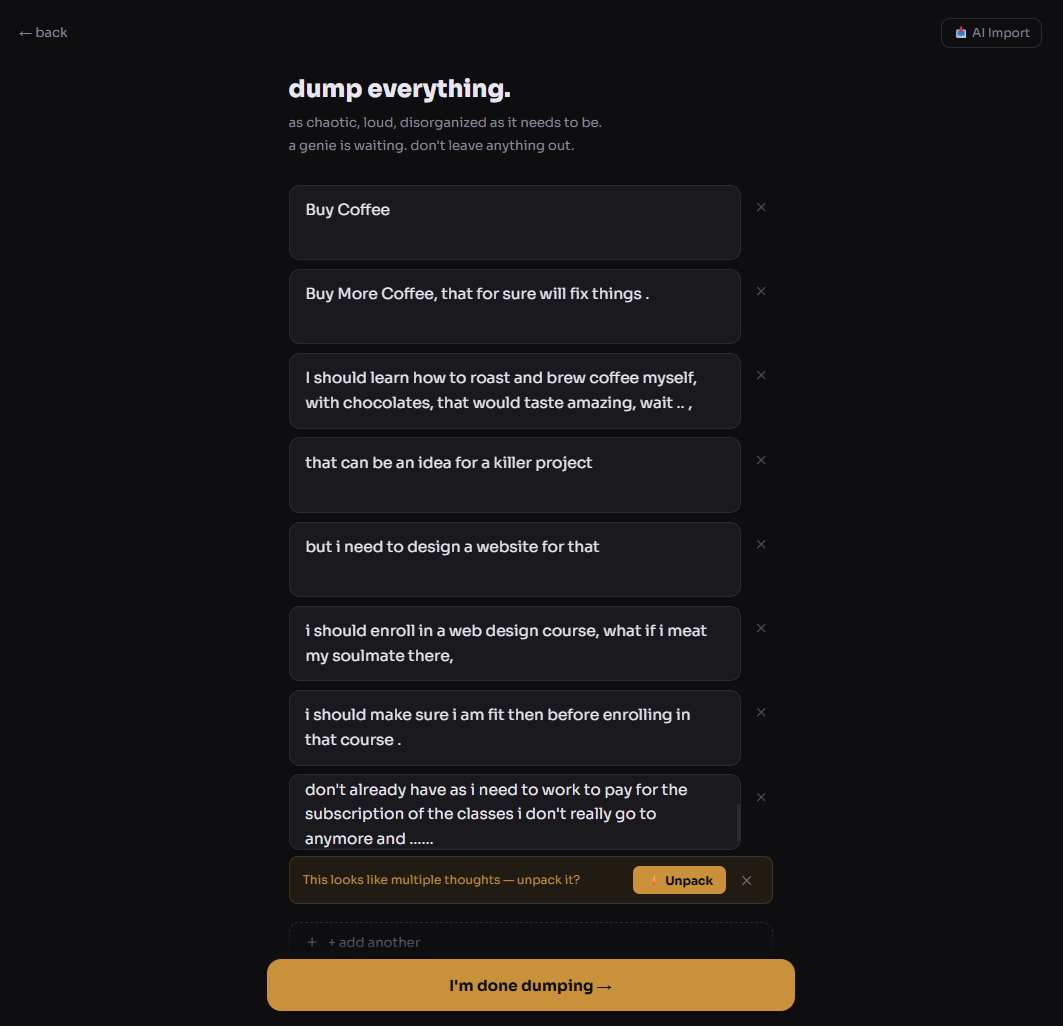
Empty your head
before you decide anything
Working memory holds ~7 items for ~2.5 seconds. When it overflows, everything feels urgent. The Dump is an external working memory. Everything gets out of your head — no organization, no judgment, no priority ranking. Just capture. The decision-making happens after, not during.
Why this exists → full explanation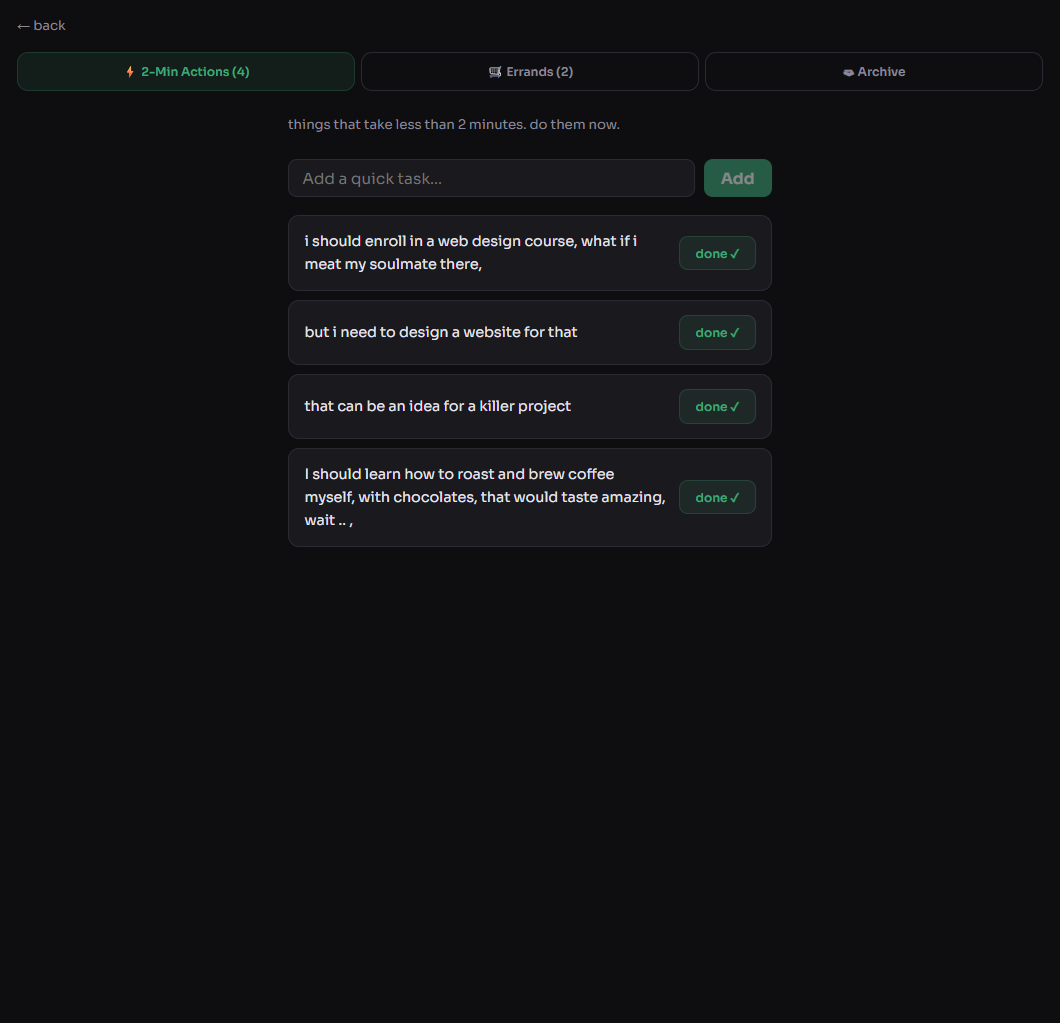
Clear the small stuff
so it stops haunting you
Small tasks sitting in a planning system create cognitive noise disproportionate to their actual weight. Anything under 2 minutes doesn't belong in your project structure — it belongs here, done immediately and cleared. This separation prevents micro-tasks from contaminating the deeper work layer.
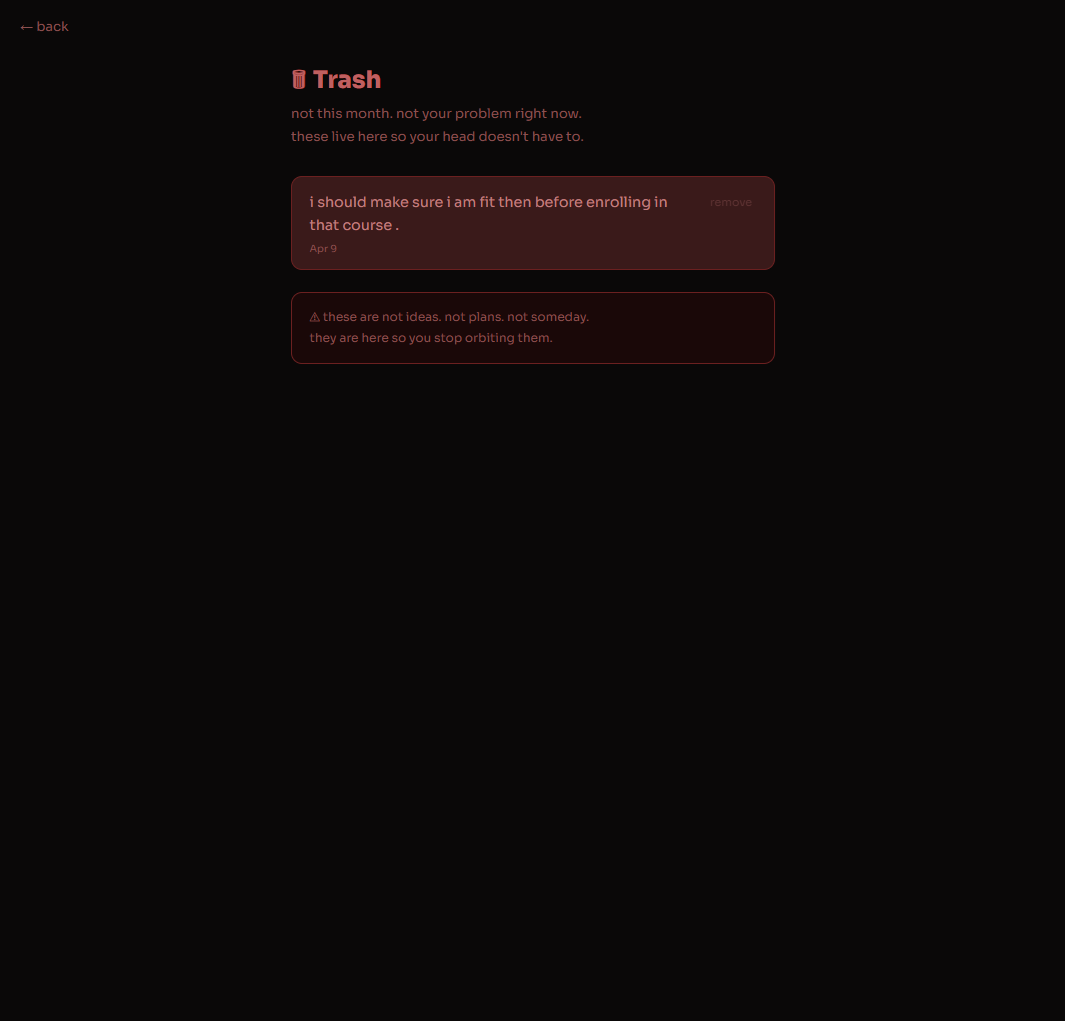
Intentional discard
closes the loop
Every unfinished item is an open cognitive loop — a background process consuming mental energy. Deletion feels like failure. Trash feels like a decision. Moving something to Trash is an intentional act: "this doesn't belong in my system right now." That intention is what closes the loop and frees the energy.
Zeigarnik effect & open loops →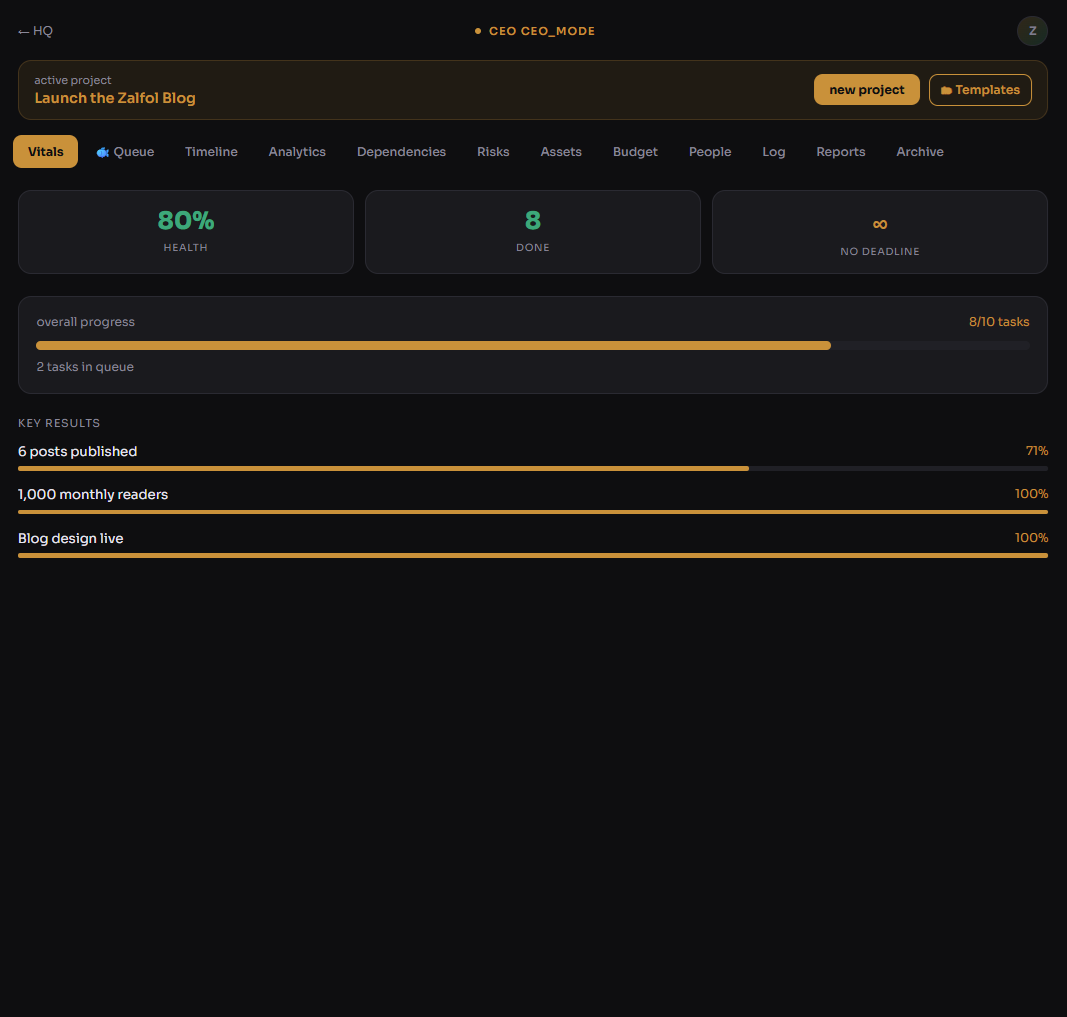
Goals that break down
into actual next actions
CEO Mode is the structured execution layer. It uses OKR logic (Objectives + Key Results) to connect ambition to daily tasks. Tasks in CEO Mode feed directly into Goldfish Mode — so every project automatically has a queue of executable next actions, sized for an ADHD brain.
How CEO Mode works →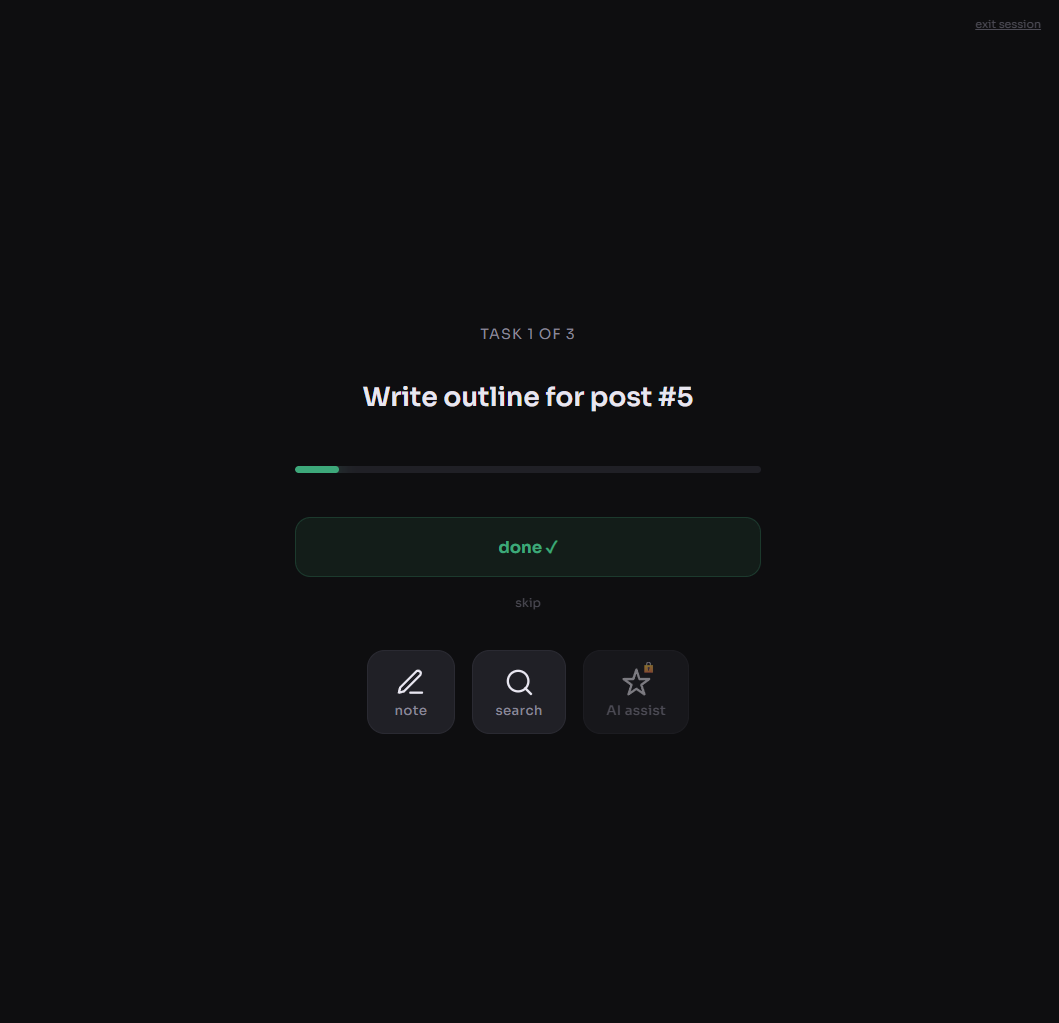
One task. Full screen.
Zero friction to start.
Task initiation fails when the brain must simultaneously manage a task and evaluate competing options. Goldfish Mode removes everything except the current task. No list. No context. No decisions. One task, a timer, a button. The cognitive cost of starting drops to near zero.
Dopamine, basal ganglia & why starting is hard →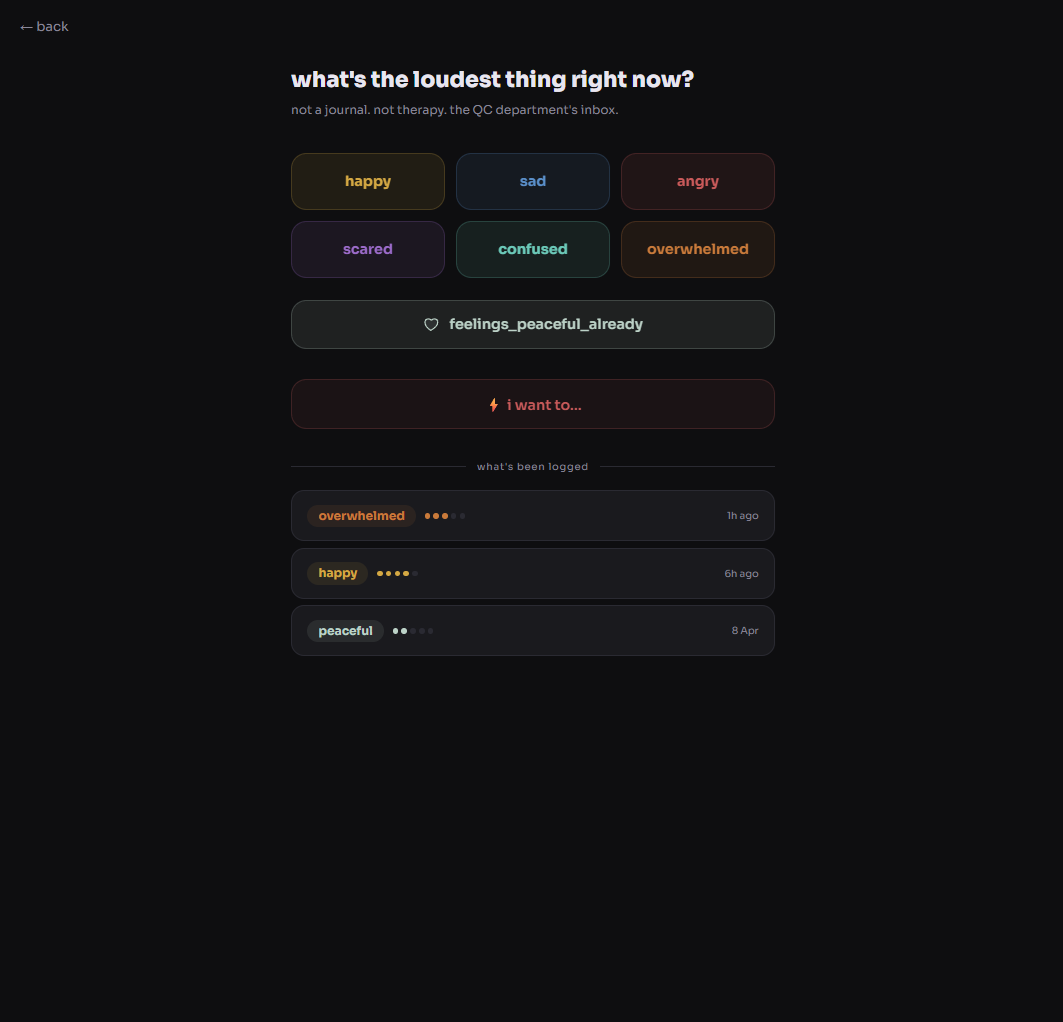
Emotions don't stay
out of the work. Log them.
Emotion dysregulation is 6× more prevalent in ADHD. One bad feeling doesn't just hurt — it disables execution. Box 5 doesn't try to fix the feeling. It logs it separately, without judgment. Over time, those logs reveal which emotional states reliably precede productive sessions — and which ones don't.
Emotion dysregulation in ADHD →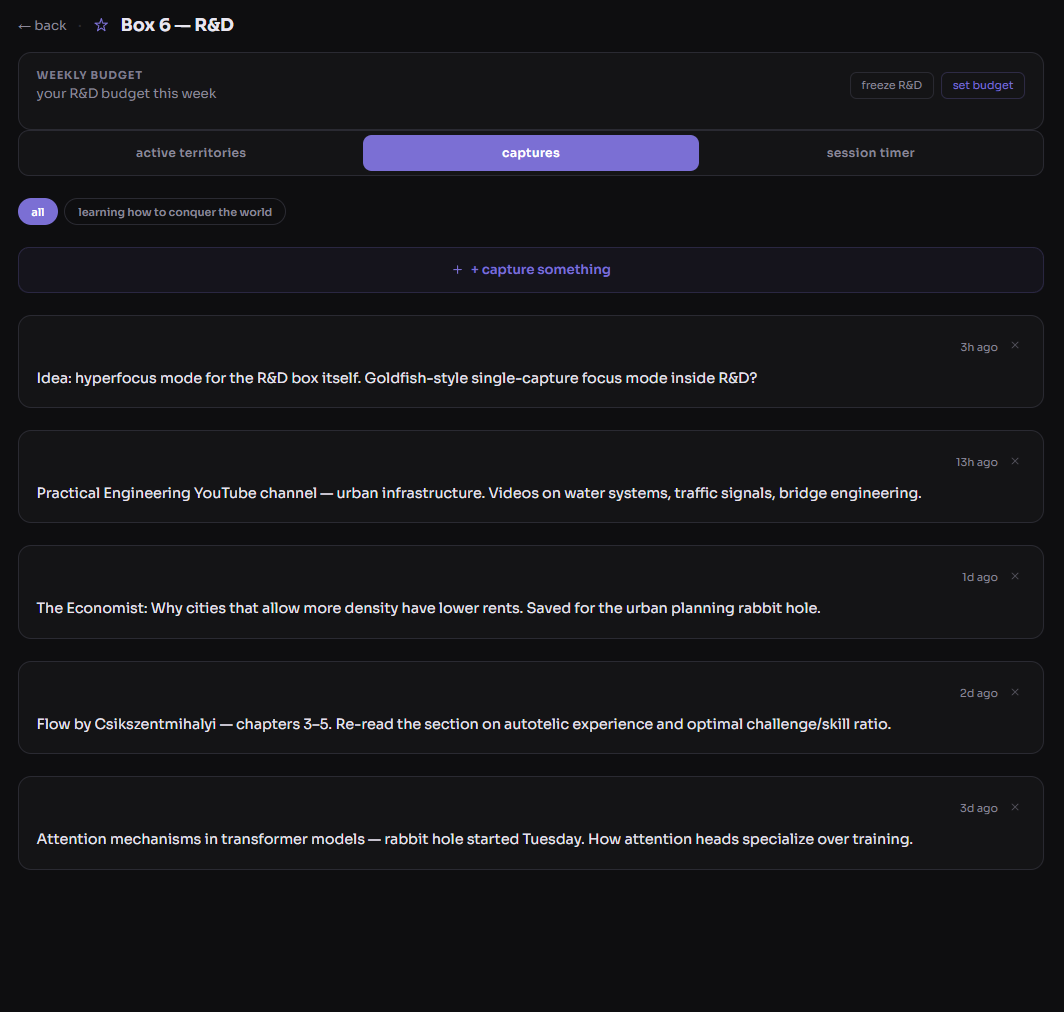
A protected space
for where your brain goes
Hyperfocus is real. Curiosity in ADHD is not casual — it's an intense magnetic pull. Denying it doesn't stop it; it just creates guilt around something that's actually a cognitive asset. R&D gives curiosity a protected home — separate from active work, visited intentionally, never contaminating the execution layer.
Save things once.
Find them when you need them.
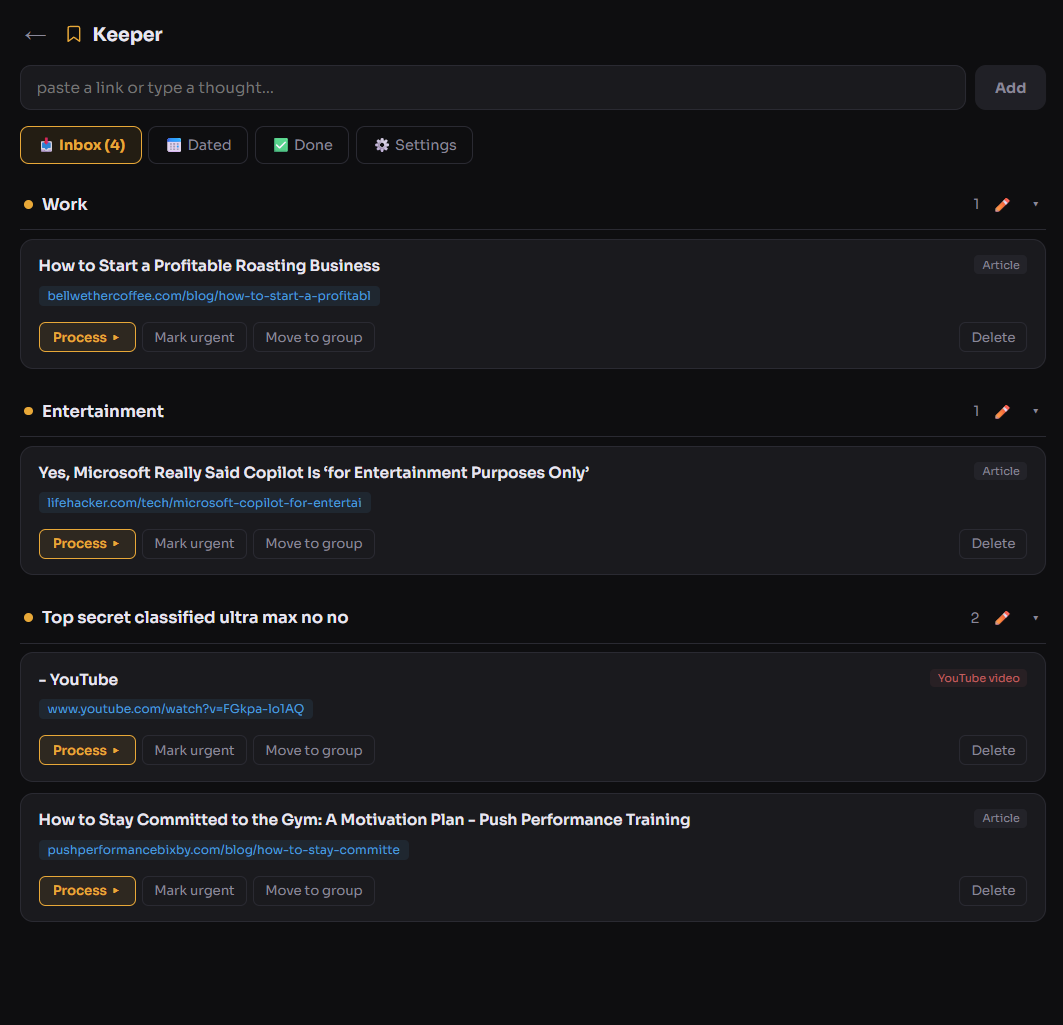
The ADHD brain is a poor archivist. Saving something to a random bookmark, note, or screenshot creates the illusion of capture without the reality of retrieval. Keeper is structured reference storage — tagged, searchable, separate from active work — so saved things are actually findable.