
You walk into the kitchen for something specific. By the time you open the fridge, it's gone. Not tucked away somewhere in long-term memory — just gone, like a whiteboard that auto-erases every 15 seconds. For people with ADHD, this isn't occasional absentmindedness. It's the default state of a working memory system operating at a structural deficit.
Between 62% and 85% of children with ADHD show measurable working memory deficits on tasks with an executive component (Kofler et al., Frontiers in Psychiatry, 2024). That's not a quirk of attention. It's a core feature of how the ADHD brain is built — and it cascades into almost everything else that's hard.
What Is Working Memory, Exactly?
Working memory is the cognitive system that holds information in mind while you're actively using it. A 2019 meta-analysis of 49 studies (n = 4,956 with ADHD; n = 3,249 neurotypical controls) found that children with ADHD show a medium effect-size deficit in verbal working memory — Hedges' g = 0.56 (95% CI [0.49, 0.64]) — compared to their neurotypical peers (PubMed 31007130). The spatial working memory gaps are even larger.
Think of working memory as a mental whiteboard. It holds:
- The first half of a sentence while you're hearing the second
- The number you're about to dial after looking it up
- The instructions your manager just gave you as you walk back to your desk
- The reason you walked into a room
Psychologist Alan Baddeley's model — still the most cited framework in cognitive neuroscience — identifies four components: a phonological loop (verbal and auditory information), a visuospatial sketchpad (visual and spatial data), a central executive (the attention controller that coordinates both), and an episodic buffer (where information integrates temporarily). In ADHD, all four are affected, but the central executive takes the hardest hit.
This isn't the same as long-term memory, which stores facts and skills durably. Working memory is the RAM, not the hard drive. And in ADHD, the RAM is both smaller and leakier than in neurotypical brains.
→ See: ADHD Executive Function — What It Is and Why It Breaks Down
Why Does ADHD Affect Working Memory So Severely?
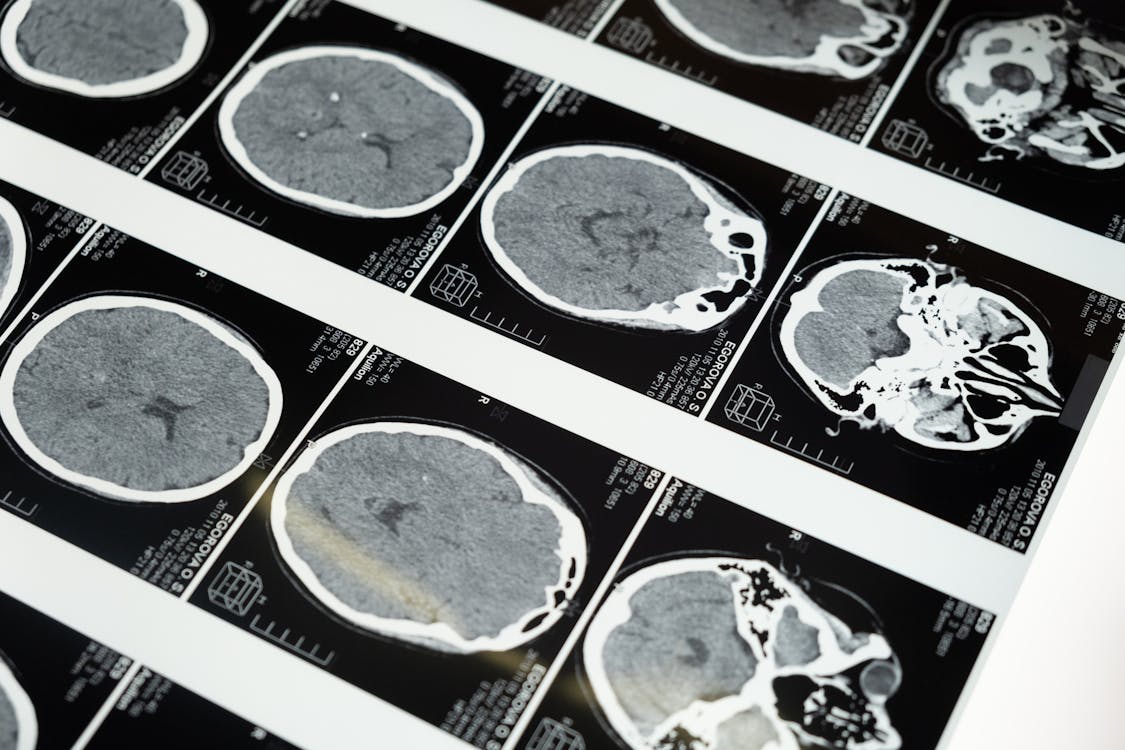
Research consistently shows 62–85% of children with ADHD have working memory deficits with a prominent executive component — not merely an attention problem but a structural difference in how prefrontal circuits function (Kofler et al., PMC11110569, 2024). The ADHD brain runs on lower baseline dopamine activity in prefrontal networks, and working memory depends heavily on sustained dopamine signaling in precisely those networks.
The deficit isn't uniform across working memory subtypes. Verbal working memory shows a medium effect size, but spatial working memory — particularly the central executive component — shows a large-to-very-large deficit:
The dopamine connection matters here in a specific way. Dopamine isn't just the "reward chemical." It's the signal that tells prefrontal neurons to hold information active — to maintain the whiteboard content instead of letting it erase. In ADHD, that signal fires inconsistently. So the whiteboard doesn't hold content under voluntary effort the way it should.
Working memory isn't one deficit among many in ADHD. It's closer to a load-bearing wall. Disorganization, poor planning, and emotional dysregulation all trace back to a working memory system that can't maintain enough active content to keep the cognitive structure standing.
→ See: How Dopamine Works in the ADHD Brain
What Working Memory Failure Actually Looks Like Day to Day
Here's what it looks like in practice: you're mid-sentence in a meeting. Someone interrupts. The second half of your thought is gone. Not retrievable. You weren't distracted — the buffer just erased.
You read a paragraph. You reach the end and realize you weren't processing it. Your eyes moved, but nothing registered. You re-read it. Same result.
You're angry. You don't know why. You were fine five minutes ago. But something loaded into a working memory slot that was already full, and the whole stack collapsed into frustration.
People with ADHD often describe this as feeling "stupid" in the moment — despite understanding, at a meta level, that it has nothing to do with intelligence. That shame response is one of the most corrosive side effects of a deficit that almost nobody accurately explains.
Everyday working memory failures in ADHD include:
- Forgetting instructions between hearing them and acting on them (3-second forgetting)
- Starting tasks but losing track of where you are mid-execution
- Forgetting what you were about to say while you're formulating it
- Time-blindness: failing to hold "now" and "later" simultaneously in mind
- Having to re-read the same email three times because the first pass didn't stick
- Making errors on routine tasks because a distraction wiped the execution stack mid-sequence
None of these are laziness. They're the predictable output of a buffer running at reduced capacity — and even further reduced when stressed, tired, or emotionally activated.
→ See: Time Blindness in ADHD — Why "Later" Doesn't Exist
How Working Memory Deficits Destroy School and Work Performance
A 2024 study found that working memory and organizational skill deficits together accounted for 100% of the academic achievement difficulties observed in children with ADHD (d = −1.09) — meaning every measurable gap in grades traced back to these two factors, not to inattention or hyperactivity as separate contributors (PMC11469574, 2024). That's one of the most underreported findings in ADHD research.
The workplace picture is just as stark. The most comprehensive study on ADHD and occupational functioning (WHO World Mental Health Survey, Kessler et al., n = 7,000+ workers across 10 countries, 2008) found that workers with ADHD lose an average of:
Across the studied countries, that adds up to 143.8 million lost workplace productivity days per year. Not from intentional underperformance, but from a cognitive system that can't hold the working context needed to perform consistently.

In practice, working memory failure at work looks like starting three tasks simultaneously and finishing none, forgetting a colleague's question by the time you form an answer, or losing your train of thought mid-presentation despite knowing the material well. A 2024 study found working memory and organizational deficits accounted for 100% of the academic achievement gap in children with ADHD — there is no remaining performance gap once these two factors are controlled for. That finding reframes ADHD underperformance entirely: it isn't about motivation or capability, it's about cognitive infrastructure.
→ See: ADHD at Work — Practical Coping Strategies
The Working Memory–Emotion Connection Most People Miss
Emotion dysregulation affects between 34% and 70% of adults with ADHD (PMC9821724, PLOS One, 2023). Most explanations stop there and treat it as a separate symptom. They miss the mechanism.
Working memory and emotion regulation aren't just co-occurring deficits. They're mechanically linked. A 2020 study found that better-developed working memory directly predicted better-developed emotion regulation in children with ADHD (β = −0.20, parent report; β = −0.17, teacher report) — and this relationship held after controlling for attention and inhibition (PMC7318097). Clinically significant emotion regulation difficulties occur in approximately 48–54% of pediatric ADHD cases, essentially the same population with working memory deficits.
Why? Because emotion regulation is a working memory task. It requires holding the triggering event, your current emotional state, the social context, and a modulated response option simultaneously in mind before acting. When the buffer is full — from task demands, noise, time pressure, fatigue — there's no cognitive room left to run that regulation process. The emotional response fires unmodulated.
This means emotional meltdowns in people with ADHD often happen not because the trigger was severe, but because the working memory buffer was already at capacity. An ADHD person who's fine at 9 a.m. and dysregulated by 2 p.m. may have simply hit the cognitive ceiling for the day. The overflow is the buffer dumping — not disproportionate emotional sensitivity, but a system reaching zero.

→ See: RSD and Emotional Flooding in ADHD
What Actually Helps When Working Memory Fails (And What Doesn't)
A 2023 meta-analysis of 36 randomized controlled trials in Molecular Psychiatry (17 focused on working memory training) found that computerized working memory training produced no significant effect on ADHD total symptoms or hyperactivity/impulsivity symptoms with blinded assessment (Nature/Molecular Psychiatry, 2023). Gains were limited to trained tasks. They didn't generalize to daily life.

What the evidence actually supports:
Medication. Stimulant medications (methylphenidate, amphetamines) increase dopamine availability in prefrontal circuits. Multiple meta-analyses show significant working memory improvement with stimulants in ADHD — this is one of the most replicated effects in psychiatric pharmacology. It doesn't fix the underlying architecture, but it improves the signal quality that the architecture runs on.
Externalization. Move working memory tasks outside the brain entirely. Written checklists, structured task apps, voice memos, visual timers, sticky notes in line of sight. The brain can't reliably hold seven things at once, so don't ask it to. Give the job to a system that doesn't forget.
Chunking and single-step execution. Break multi-step tasks into single steps and execute them one at a time with a written record of where you are. Don't ask the brain to hold the whole procedure — give it only the next step.
Environmental load reduction. Noise, visual clutter, and open browser tabs all compete for working memory slots. Fewer competing inputs means more buffer available for the task that matters.
Aerobic exercise. Unlike computerized training, aerobic exercise shows consistent evidence for working memory improvement in ADHD — likely via BDNF upregulation and improved prefrontal blood flow. Twenty to thirty minutes before demanding cognitive tasks is well-supported.
Managing emotional load as a cognitive strategy. Because emotion regulation and working memory share the same prefrontal buffer, reducing emotional activation — through routine, predictability, and advance warning of transitions — directly preserves working memory capacity for tasks.
→ See: How Zalfol's Dump Feature Replaces Working Memory
Frequently Asked Questions
What is working memory in simple terms?
Working memory is the brain's temporary scratchpad — it holds information actively in mind for seconds to minutes while you're using it. Unlike long-term memory, it's strictly limited in capacity and duration. In most adults, it holds roughly 4–7 items at once. In ADHD, that capacity is structurally reduced, making it harder to follow multi-step instructions, stay on track mid-task, or hold a thought while formulating a response.
How does ADHD affect working memory specifically?
Between 62% and 85% of children with ADHD have measurable working memory deficits, particularly in the central executive component that coordinates attention and holds information for active use (Kofler et al., 2024). A meta-analysis of 49 studies found a medium effect size (Hedges' g = 0.56) for verbal working memory deficits, with spatial working memory deficits reaching large effect sizes (g = 0.85–1.06). The root mechanism is reduced dopamine signaling in prefrontal circuits responsible for maintaining active information.
Is working memory the same as short-term memory?
They overlap but aren't identical. Short-term memory passively holds information briefly. Working memory actively manipulates it — you're doing something with the information while holding it (following a conversation, solving a problem, regulating an emotional response). Working memory requires more cognitive resources and is far more sensitive to ADHD-related deficits. Most modern research uses "working memory" as the more clinically precise term.
Can working memory be improved in ADHD?
Computerized working memory training doesn't generalize beyond trained tasks, per a 2023 meta-analysis of 36 RCTs (Molecular Psychiatry). Stimulant medication and aerobic exercise show the strongest evidence for functional working memory improvement. Externalization — using tools and systems to offload the working memory task to your environment — is the most practical and consistently effective strategy for daily life.
Why do ADHD emotional reactions often seem disproportionate to the trigger?
They usually aren't about the trigger. Working memory and emotional regulation share the same prefrontal buffer. When working memory fills up — from task demands, fatigue, noise, or sustained cognitive effort — there's no remaining capacity for the regulation process. A small trigger late in a demanding day hits a system already at zero. The response looks disproportionate because the accumulation isn't visible. See how Zalfol addresses emotional flooding.
What This Means If You Have ADHD
Working memory isn't one symptom of ADHD among many. It's closer to the engine — and deficits here cascade into academic underperformance, workplace productivity loss, and emotional dysregulation, not because ADHD creates each problem separately, but because a leaky working memory buffer makes all of them harder to manage simultaneously.
The research is unambiguous on a few things: the deficit is real and measurable, it doesn't respond to willpower or brain-training software, and the most effective interventions either improve the dopamine signal (medication, aerobic exercise) or bypass the bottleneck entirely (external systems, environmental design, single-step execution).
The whiteboard doesn't hold more just because you concentrate harder. But you can stop depending on the whiteboard.
→ Start building your external cognitive system: Try Zalfol free