
You can hyperfocus on a YouTube rabbit hole for six straight hours. You also lost your keys three minutes ago. Both of those things happened inside the same brain on the same day. That's not laziness. That's not a character defect. That's dopamine timing. Understanding it changes everything.
Approximately 366 million adults worldwide live with ADHD, according to a Cambridge Core systematic review published in 2024. Most of them have been told, at some point, that their brain is "low on dopamine." That's a useful starting point. But the 2024 neuroscience says the real picture is more interesting — and far more useful for actually designing a life that works.
This article unpacks what current research actually shows about dopamine signaling in the ADHD brain, why stimulation-seeking is a rational neurological response rather than a moral failure, and what the evidence says you can do about it.
If you haven't read our piece on working memory deficits in ADHD, it pairs directly with this one — both symptoms share the same dopamine architecture.
What Is the Dopamine Deficit in ADHD?
ADHD affects approximately 366 million adults globally, about 3.1% of the world's adult population (Cambridge Core / European Psychiatry systematic review, 2024). The condition is often described as "low dopamine." But that framing misses the mechanism. The real issue isn't how much dopamine is produced. It's how that dopamine is timed, released, and received.
Dopamine is a neurotransmitter that signals reward, motivation, and salience. It tells the brain which things are worth paying attention to. Two systems matter most here: tonic dopamine (a steady background hum that keeps the brain's "goal filter" online) and phasic dopamine (sharp spikes that fire in response to novelty, reward, or surprise). Both systems work together to sustain goal-directed behavior. In ADHD, they don't.
The popular "low dopamine" shorthand emerged from early neuroimaging studies showing reduced receptor binding and transporter density in ADHD brains. Those findings are real. But a 2024 Frontiers in Psychiatry review by MacDonald et al., examining 2,990 studies and including 39 meta-analyses, concluded there is "evidence for dopamine involvement but limited evidence for a hypo-dopaminergic state per se." Dysregulation, not deficiency, is the more accurate word.
This distinction is not just academic. If you believe your brain produces too little dopamine, the solution sounds like "take medication and hope." If you understand the system is dysregulated, a much wider set of strategies becomes logical.
The dopamine dysregulation that drives inattention also underlies time blindness in ADHD — a related but distinct symptom worth understanding alongside this one.
Which Dopamine Pathways Does ADHD Disrupt?
The ADHD brain shows measurable structural differences in the regions these two pathways run through. The ENIGMA Working Group mega-analysis (Lancet Psychiatry, 2017) examined 1,713 people with ADHD and 1,529 controls, finding significantly smaller subcortical volumes in the amygdala (d = -0.19), nucleus accumbens (d = -0.15), putamen (d = -0.14), and caudate (d = -0.11).
These are the core nodes of the two dopamine pathways most disrupted in ADHD. The effect sizes are modest but consistent across thousands of participants: structural differences in reward-critical regions, not scattered noise.
The mesocortical pathway runs from the ventral tegmental area to the prefrontal cortex. Disruptions here produce the cognitive and attention deficits that define ADHD: difficulty filtering irrelevant information, trouble sustaining effort, and impaired working memory. The prefrontal cortex is the brain's executive command center, and dopamine is what keeps it online.
The mesolimbic pathway runs from the ventral tegmental area to the nucleus accumbens and ventral striatum. Disruptions here produce the motivational deficits: flat affect toward ordinary rewards, difficulty starting tasks that aren't immediately interesting, and a near-constant drive toward novelty and intensity.
Most people with ADHD experience disruptions in both. The cognitive and motivational symptoms aren't separate problems. They're two outputs of the same dysregulated dopamine architecture.
Why ADHD Brains Chase Stimulation (The Science)
Research published in PMC4589406 found that tonic (baseline) dopamine in the right caudate measured 3.21 in ADHD versus 2.53 in controls, about 27% higher at rest. But phasic (task-evoked) release told the opposite story: ADHD scored 2.17 versus 2.88 in controls (p=0.004), a significantly blunted reward spike. The ADHD brain sits at a higher idle but gets less signal when something actually happens.
Think of it this way. Your brain's dopamine system is a smoke alarm. In a neurotypical brain, it fires clearly when there's smoke. The ADHD brain's alarm is set higher: routine levels of "smoke" don't trigger it. So the brain keeps searching for a bigger fire — something intense enough to finally trip the alarm. That search is what looks like stimulation-seeking from the outside.
The hyperfocus-inattention paradox makes perfect sense from this lens. The same person who loses focus during a work presentation can sustain attention for eight hours on a video game. Both are the same brain, the same dopamine system. Routine tasks don't produce enough phasic spike to compensate for the low tonic floor. High-interest activities generate a continuous stream of small novelty rewards that keep phasic dopamine elevated throughout. Inattention and hyperfocus aren't opposites. They're two outputs of one calibration problem.
This also explains why urgency works so reliably for ADHD brains. A deadline creates genuine threat salience, which floods the system with dopamine and norepinephrine at once. The brain can suddenly do the thing it couldn't start for three weeks. That's not a motivational mystery. That's the phasic system getting a big enough spike to finally register.
The Tonic-Phasic Imbalance: The Real Story
The Volkow et al. PET study (JAMA, 2009) found measurably lower D2/D3 receptor binding in ADHD adults versus controls: left caudate 2.47 vs 2.80 (p=.005), nucleus accumbens 2.68 vs 2.85 (p=.004), and midbrain DAT 0.09 vs 0.16 (p<.001). Fewer available receptors means the same dopamine signal produces less effect. The deficit is real. The story is more nuanced.
Lower DAT density means dopamine clears from the synapse inconsistently across regions. What looks like a simple "deficiency" is actually a calibration mismatch that produces inconsistent signal strength — not just reduced total dopamine.
The midbrain DAT numbers are the most striking. Dopamine transporter density in ADHD is roughly 44% lower than controls in the midbrain (0.09 vs 0.16). The transporter is what moves dopamine back into neurons after it's been released. Fewer transporters mean the system struggles to reset cleanly between reward signals, contributing to the noisy, inconsistent signaling pattern that drives both overstimulation and under-reward.
When I first read about the tonic-phasic split, something clicked that years of "try harder" advice never produced. I'd spent years treating symptoms: the distraction, the half-finished projects, the urgency addiction. But the mechanism underneath was never clear. Once it was, designing around it became possible. The system wasn't broken. It was calibrated for a different environment.
What Happens in the ADHD Brain During Reward?
During reward processing, the nucleus accumbens in ADHD brains shows decreased activation compared to controls, per fMRI evidence reviewed in a 2019 ScienceDirect study. The orbitofrontal cortex (OFC) also shows significantly lower activation in adults with ADHD. These two regions together form the brain's anticipated-reward circuit: the "is this worth starting?" calculation that drives task initiation.
When the nucleus accumbens doesn't activate strongly enough during ordinary rewards, the motivational signal that drives task initiation never fires. This is why starting tasks is often the hardest part for ADHD brains. It's not apathy. The reward prediction circuitry genuinely isn't computing enough expected value from routine work to generate a "go" signal.
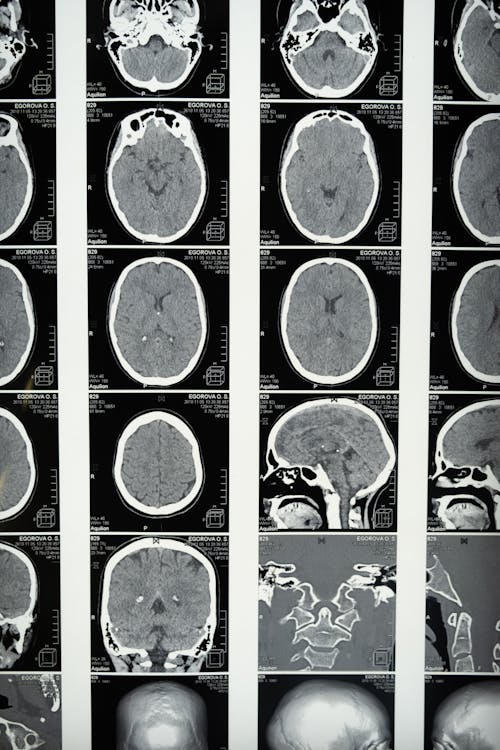
The OFC finding is particularly important for understanding procrastination. The OFC calculates future reward value and uses that calculation to sustain present effort. Lower OFC activation in ADHD means future rewards are literally less vivid — neurologically harder to use as motivation. This is related to time blindness in ADHD, where future consequences feel abstract and remote rather than concrete and real.
What this means practically: the ADHD brain isn't refusing to be motivated. It's running a reward calculation that consistently returns a lower-than-normal number for tasks that lack immediate, concrete, or novel payoffs.
This also connects to working memory deficits in ADHD — when the reward circuit doesn't activate strongly, the working memory system has less dopamine-driven support to hold task context in mind.
What Are the Risks of ADHD Stimulation-Seeking Behaviors?
Stimulation-seeking in ADHD falls into recognizable patterns, and the data on their risks is sobering. A 2023 meta-analysis of 81,234 children found that screen time of 2 or more hours per day was associated with an odds ratio of 1.51 for ADHD (PubMed 37163581, 2023). Internet addiction shows even stronger associations: OR 2.51 (95% CI 2.09–3.02) for ADHD versus non-ADHD populations (PMC5517818). Gaming disorder follows a similar pattern.
The physical risk extends beyond screens. A 2023 Acta Psychiatrica Scandinavica study by Libutzki et al. found ADHD associated with a relative risk of 1.35 for injuries overall, rising to RR 1.47 for females. A separate meta-analysis put the odds ratio for injury at 1.96. ADHD individuals are nearly twice as likely to sustain injuries as their non-ADHD peers (PMC5556632).
The most significant long-term risk is substance use. A 2023 PMC meta-analysis found that 21% of adults in substance use disorder treatment have ADHD (PMC9859173). Alcohol shows the highest co-occurrence at 25%, followed by cocaine at 19% and opioids at 18%. Substances produce large, fast, reliable phasic dopamine spikes. For a brain running chronic tonic deficiency, that pharmacological shortcut is neurologically compelling in a way that's hard to overstate.
None of these behaviors represent moral failures. They're the predictable outputs of a brain that has figured out, through trial and error, which inputs reliably produce the dopamine signal it needs to function. The risk is real, but the logic is rational.
How Do Stimulant Medications Restore Dopamine Balance?
Stimulant medications work by targeting the dopamine transporter directly. Decades of PET imaging have made the mechanism unusually clear. Methylphenidate binds to the dopamine transporter and blocks it, preventing reuptake and raising extracellular concentrations in the synapse (PMC8063758, 2021). Amphetamine-based medications go further, reversing the transporter and actively pushing stored dopamine out into the synapse.
A Volkow et al., 2013 Brookhaven National Laboratory study found that 12 months of methylphenidate treatment produced a 24% increase in dopamine transporter density. This suggests medication doesn't just compensate for reduced dopamine availability. It may partially restore the underlying transporter infrastructure over time.
The clinical evidence matches the mechanism. A 2018 network meta-analysis (PubMed 30097390) found all ADHD medications outperformed placebo, with amphetamine showing slightly higher effect sizes than methylphenidate in adults. Dopaminergic agents consistently outperforming norepinephrine-only agents in adult ADHD specifically implicates the dopamine pathway as the primary mechanism, not a secondary effect.
Medication is not right for everyone, and this article isn't making clinical recommendations. But understanding the mechanism matters. Stimulants work because ADHD is a dopamine timing problem, and they correct the timing. When used appropriately, they're not providing a shortcut. They're fixing a calibration error.
What Non-Medication Strategies Support Dopamine in ADHD?
Aerobic exercise consistently emerges as the most evidence-supported non-medication approach to dopamine support in ADHD. It increases dopamine and norepinephrine availability in the prefrontal cortex — the same pathways stimulant medications target. A December 2024 Frontiers in Psychiatry review found mind-body exercise produced significant improvements in attention for people with ADHD. A 2025 SAGE Journals meta-analysis confirmed exercise improved inhibitory control in ADHD adults specifically.
Exercise doesn't replicate medication effects, but it produces genuine neurochemical change rather than simply teaching coping strategies. Twenty to thirty minutes of moderate aerobic exercise before cognitively demanding work can extend focus windows and reduce the drive toward immediate stimulation-seeking.
In our experience working with ADHD adults, the strategies that produce the most durable results share a common feature: they give the phasic system a legitimate outlet while protecting the tonic baseline from unnecessary drain. Exercise does this by producing a natural dopamine and norepinephrine surge with a clean recovery curve. Social media does the opposite — rapid, shallow phasic hits that leave the baseline lower than before.
Sleep is the other major lever. Chronic sleep deprivation suppresses tonic dopamine production. ADHD brains are already operating with a reduced tonic baseline; adding sleep debt compounds the deficit significantly. Studies on neurotypical adults consistently show that tonic dopamine drops after a single night of poor sleep. For ADHD brains, the effect is amplified.
Structured novelty rounds out the evidence-based toolkit. Rather than eliminating novelty-seeking (which is both futile and unnecessary), giving novelty a designated time and space channels phasic dopamine into lower-risk territory. Planned creative sessions, learning new skills, and varied project structures all provide legitimate phasic hits without the escalation risk of screens, conflict, or substances.
The common thread across exercise, sleep, and structured novelty: they work with the dopamine system's actual architecture rather than fighting it.
The Evolutionary Angle: Is Stimulation-Seeking a Feature?
ADHD heritability ranges from 74% to 88% in twin studies (PMC3513209), making it one of the most heritable psychiatric conditions. Novelty-seeking has roughly 50% heritability on its own (PMC9885942, 2023). Traits this heritable don't persist at 3–11% population prevalence across centuries unless they confer some advantage.
A 2024 Springer Nature study offered a compelling explanation. ADHD individuals in foraging simulations departed resource patches sooner than controls but achieved higher reward rates overall. In environments where resources are patchy and unpredictable, the ADHD brain's drive toward novelty and its rapid disengagement from depleted sources becomes a genuine competitive advantage.
The stimulation-seeking trait that causes problems in a classroom or an open-plan office may have been exactly right for an environment that required constant scanning, rapid threat detection, and willingness to leave a familiar but failing resource for a better unknown one.
This doesn't mean ADHD isn't worth treating. It means the trait itself is neither good nor bad. It's context-dependent. Environments designed to work with the ADHD brain's actual dopamine architecture aren't accommodations. They're just good design.
FAQ
Why do ADHD brains crave constant stimulation?
ADHD brains have lower tonic (background) dopamine, so ordinary tasks feel flat and unrewarding. The brain compensates by seeking high-stimulation inputs: novelty, urgency, conflict, or intensity. These inputs trigger phasic dopamine bursts large enough to register. This is a neurological adaptation, not a character flaw or a discipline problem. Understanding the mechanism shifts everything about how you respond to it.
Is ADHD really a dopamine deficiency?
Not exactly. A 2024 Frontiers in Psychiatry review (MacDonald et al.) examined nearly 3,000 studies and found evidence for dopamine involvement but limited evidence for a straightforward hypo-dopaminergic state. The accurate picture is dopamine signaling dysregulation: reward circuits that fire differently, at the wrong times, and with the wrong signal strength. "Dysregulation" is more precise and more useful than "deficiency."
Why can people with ADHD hyperfocus on some things but not others?
Hyperfocus and inattention are two outputs of the same system. Low tonic dopamine means routine tasks feel flat; the brain disengages. High-interest activities produce a sustained stream of phasic dopamine spikes that compensate for the low baseline. Attention follows stimulation intensity, not intention. The same brain that can't file a form for 20 minutes can game for eight hours — because one task feeds the phasic system and one doesn't.
How do stimulant medications help ADHD?
Methylphenidate blocks the dopamine transporter (DAT), preventing reuptake and raising extracellular dopamine levels. Amphetamines additionally reverse the transporter, actively pushing stored dopamine into the synapse. A 2013 Brookhaven National Laboratory study (Volkow et al.) found 12 months of methylphenidate increased DAT density by 24%, suggesting the medication partially restores transporter infrastructure over time. A 2018 network meta-analysis confirmed all ADHD medications outperform placebo, with amphetamine showing slightly higher effect sizes in adults.
Can exercise help ADHD without medication?
Yes, with evidence behind it. Aerobic exercise increases dopamine and norepinephrine availability in the prefrontal cortex — the same pathways stimulants target. A December 2024 Frontiers in Psychiatry review found mind-body exercise significantly improved attention in ADHD populations. A 2025 SAGE Journals meta-analysis confirmed exercise improved inhibitory control in ADHD adults. Exercise won't replicate medication, but it produces genuine neurochemical change and is well-supported as a complement.
Why do people with ADHD have higher rates of substance use?
Substances reliably produce large phasic dopamine spikes, which temporarily fill the gap that chronic tonic dysregulation creates. A 2023 PMC meta-analysis (PMC9859173) found 21% of adults in substance use disorder treatment have ADHD. Alcohol shows the highest co-occurrence at 25%, followed by cocaine (19%) and opioids (18%). This is stimulation-seeking at its most dangerous extreme: a rational neurological drive meeting a pharmacological shortcut that escalates over time.
Does ADHD affect brain structure?
Yes. The ENIGMA Working Group mega-analysis (Lancet Psychiatry, 2017) compared 1,713 people with ADHD against 1,529 controls and found significantly smaller volumes in multiple subcortical regions: amygdala (d = -0.19), nucleus accumbens (d = -0.15), putamen (d = -0.14), caudate (d = -0.11), and hippocampus (d = -0.11). These are the core regions of the dopamine-driven motivation and reward circuitry. Their smaller volume in ADHD is consistent with the functional imaging findings.
Is ADHD stimulation-seeking a disorder or an evolutionary trait?
Probably both, depending on context. ADHD heritability is 74–88% in twin studies, and novelty-seeking has roughly 50% heritability. A 2024 Springer Nature foraging simulation found ADHD individuals departed resource patches sooner but achieved higher reward rates overall, consistent with an adaptive advantage in variable environments. The same trait that disrupts classroom learning may have aided survival in environments requiring constant scanning and rapid reallocation. Context determines whether it's a deficit or a feature.
From Deficit to Design
The "low dopamine" story has done a lot of work for a lot of years. It's not wrong, exactly. But it's incomplete in ways that matter. The real picture is a dysregulated signaling system with blunted phasic responses and inconsistent tonic baselines, playing out in reward circuits with measurably different receptor density and smaller subcortical volumes. It's more complex, more accurate, and far more useful than the shorthand.
Stimulation-seeking is the brain's rational response to that system. Deadlines work because urgency spikes the phasic system. Hyperfocus happens because high-interest tasks sustain phasic dopamine continuously. Substance use is stimulation-seeking at the extreme end. None of these are moral failures. They're all the outputs of a brain solving the same calibration problem, in different contexts, with different tools.
What works: exercise, consistent sleep, structured novelty, medication where appropriate, and environmental design that gives the phasic system legitimate outlets while protecting the tonic baseline. What doesn't work: willpower applied to a neurochemistry problem.
The question isn't "how do I fix my dopamine?" It's "how do I build a life where the dopamine system I have is enough?" That shift — from deficiency to design — is where things actually change. It's also the design principle behind Zalfol: a cognitive operating system built to scaffold the dopamine architecture you have, starting with Goldfish Mode — one micro-task, total isolation, no nav, no numbers.
→ Sources reviewed and verified. All statistics sourced from peer-reviewed publications. Last updated April 2026.